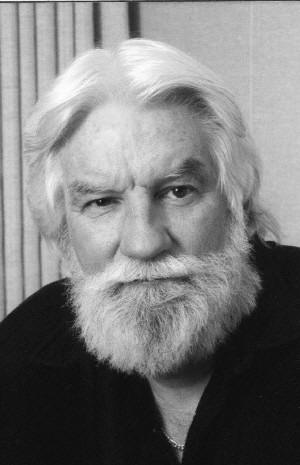
About Paul Grant
|
|
About Paul Grant |
|
|
Paul Michael Grant was born in
Poughkeepsie, NY, on May 9, 1935, the grandson of Irish immigrants, and
grew up in the mid-Hudson Valley. In 2014, Grant obtained dual
nationality status shared with the United States and the Republic of
Ireland. His father worked for IBM and his
mother for the local utility company, Central Hudson Gas & Electric,
presaging what was to become a lifelong career filling both parents’
shoes. He attended Governor Clinton elementary school in
Poughkeepsie; graduating at the top of his 8th grade class of
1949. Subsequently he attended High School, initially at Oakwood
Academy, a private Society of Friends institution in the Town of
Poughkeepsie, and then later transferred to Wappingers Central School
located in the nearby village of Wappingers Falls, graduating in June,
1953. |
|
While in high school, he earned varsity letters in soccer, golf and track, participated in school political debate activities, receiving on graduation an honors grade in American History, awarded by the New York State Board of Regents. During the spring term of his senior year in high school, still only 17, he entered the employ of IBM, commencing what was to become a 40 year career with the company. He began as a pinsetter in the bowling alleys of IBM’s employee country club, and after graduation was assigned to the mail room of the Poughkeepsie Development Laboratory. He was then promoted in 1954 to electronics technician and system programmer on Project SAGE, the world’s first supercomputer and prototype for NORAD and stationed at the MIT Lincoln Laboratory. In 1956, recognizing his work performance and abilities, the Corporation subsequently offered to underwrote his university attendance while he remained an employee, leading to a BSEE degree (summa cum laude, 1960) from Clarkson University and the AM (1961) and PhD (1965) degrees in Applied Physics from Harvard University. At Clarkson, he was elected to, and served as an officer on the engineering honor societies, Eta Kappa Nu (president) and Tau Beta Pi (vice-president), as well as joining IRE (now IEEE) as a student member, receiving in his senior year, the IRE Northern New York State Section Outstanding Student award. At Harvard, he was elected to Sigma Xi, the national scientific honor society. While attending Clarkson (1956-60), Grant returned to work summers at IBM on thin magnetic film memory development, silicon epitaxial film growth and laser spectroscopy. During this period, he carried out research on magneto-resistive and Hall Effect thin ferromagnetic film devices, forerunners of today’s spintronics technologies, which also formed the central topic of his senior thesis and later resulted in two patents. The summer following his first year at Harvard was spent back at IBM designing and constructing one of the first, if not the first, thin film evaporation chamber with the capability to measure in-situ reflection electron diffraction during film growth, now known as RHEED. This facility was later used to make samples for his PhD thesis at Harvard which addressed the optical properties and band structure of semiconductor thin films as a function of evaporation rate, substrate temperature, cooling dynamics, and resulting crystallographic structure. Upon completing graduate school, Dr. Grant was posted by IBM to its San Jose Research Laboratory (now the IBM Almaden Research Center) where he pursued a variety of basic research studies on the physical properties of magnetic semiconductors, organic and polymer metals, and high temperature superconductors, and contributed as well to the initial development of laboratory automation software and systems. During this period of his career, he also helped organize, manage and participated in the research effort on magneto-resistive read head technology, variations of which are now employed in every computer hard drive in the world. From 1986 to 1989, he became deeply involved in and associated with the discovery period of high temperature superconductivity, and managed IBM's research program at the Almaden Center. He is a co-inventor on the international base patent for high temperature superconductivity. During this period, he was designated as an IBM corporate spokesperson to the press and media on high temperature superconductivity. Grant’s long IBM career also encompassed several divisional executive staff assignments and responsibilities to evaluate IBM’s printer, storage and display technologies, the latter leading to the development of the IBM ThinkPad laptop TFT-LCD flat panel monitor, culminating in 1990 – 1992 with a two-year sabbatical as IBM Visiting Professor of Materials Science at the National University of Mexico where he carried out quantum Monte Carlo computations on model spin Hamiltonians. In 1993, on the occasion of his 40th anniversary at IBM, Grant retired to accept a position as Science Fellow at the Electric Power Research Institute (EPRI) where he oversaw an annual $5M program consisting of exploratory studies on wide bandgap semiconductors and power applications of superconductivity. In addition, he served as a consultant to EPRI’s executive management and utility membership on a broad range of energy science issues, including hydrogen, power line communication, fusion, fission, superconducting transmission cables, and photovoltaic generation of electricity, as well as probing many multifarious claims of “free energy” violating basic principles of thermodynamics and quantum mechanics. In 2000, in collaboration with Dr. Chauncey Starr, EPRI’s Founder, he developed the concept of the SuperGrid, a symbiosis of Nuclear, Hydrogen, Superconductivity, Solar-PV-Roofs and Urban-Biomass-Combustion technologies supplying carbon-free, non-eco-invasive “Green Energy” for Planet Earth. In early 2004, Grant retired from EPRI to undertake a modest consultancy practice, W2AGZ Technologies (named in honor of his father's "ham radio" station), as well as to return to his career-wise interest and investigation into the basic mechanisms of superconductivity, especially exploring paths which have the potential to enable materials superconducting at room temperature and above. He continues to write and lecture on general energy issues as well as the SuperGrid Vision, including many book reviews, published in Nature, Physics World, Physics Today and Scientific American. Dr. Grant has published over 120 papers in scientific peer-reviewed journals, as well as numerous articles on science and energy issues in the popular press, which have earned him several awards as a science writer and commentator. These are in addition to editorials and interviews on various political and social issues which have appeared in the San Jose Mercury News, The New York Times, the Wall Street Journal, the Financial Times, and Nature. In addition, Grant has been interviewed on a number of international and cable television outlets, such as ABC Good Morning America, all of the US national news network (ABC, NBC, CBS, Fox) on the occasion of the 1987 Nobel Award to Bednorz and Mueller, as well as Nova, Horizon, Beyond 2000 (Australian Broadcast Company), and several other networks. Recently (2008), he was interviewed on camera regarding the SuperGrid Vision by the Canadian Broadcast Company, CBC, and CBS News 60 Minutes on the 20th anniversary of the announcement of “cold fusion.” More recently, he appeared in a YouTube interview produced by Physics World (2011), celebrating the 25th anniversary of the discovery of high temperature superconductivity and its possible applications (click here). He has written over a dozen commentaries and book reviews for the respected journal Nature and its companion publications. He has advised bipartisan members of US Congressional Committees on Science and Energy on various policy issues. Dr. Grant is a Senior Life Fellow of the American Physical Society and has served on the Executive Committees of the Society for the Forum on Industrial and Applied Physics and the Forum on Education, as well as the editorial advisory board of The Industrial Physicist. In 2005, he was appointed a Fellow of the Institute of Physics, United Kingdom in recognition of his service on the editorial board of the Institute’s Journal of Superconductivity. From 2005 - 2008, he had the honor of receiving an appointment as Visiting Scholar in the Department of Applied Physics at Stanford University. Currently, (2011) he holds an Associate Staff appointment at the Jet Propulsion Laboratory, CalTech, where he uses national computational resources to pursue modeling potential material candidates for room temperature superconductors. In 2012, he was appointed by Nobel Laureate Carlo Rubbia, along with Nobel Laureate Alex Mueller, to the Committee on Superconductivity of the Institute for Advanced Sustainability Science (IASS) in Potsdam, Germany. Most recently (2014), he received the first Distinguished Lectureship Award on the Applications of Physics from the American Physical Society, and in 2014 toured a number of American universities, lecturing graduate and undergraduate physics students on the merits of pursuing future careers in industry and public service. In 2013, Paul Grant was appointed to the Honors Program Advisory Board of his undergraduate institution, Clarkson University. In 2015, he was recognized as a Notable Knight of Clarkson's alumni (here). Finally, Grant has served as a member of various mountain rescue and avalanche control organizations, both in professional and volunteer roles, for over 22 years (1962 – 1984) at resorts from Vermont to California. He learned to ski at age five and has continued to do so every year to the present. At one time, he was certified as a Level II Paramedic by the American Association of Orthopedic Surgeons, as well as accredited by the US National Forest Service as skilled in the use of munitions for avalanche control. He was one of three founders of the Alpine Meadows Volunteer Patrol in 1965, serving as Patrol Leader in 1969. He played varsity soccer while in high school, and on intramural teams while attending college and graduate school. For 18 years, from 1965 to 1983, he competed as a member of the IBM plant team in San Jose. His soccer career was "interrupted" by the discovery of high temperature superconductivity in 1986!
|
|
the
|
|
|
|
|